Earlier this month, the newest GLP-1 pill was FDA approved on April 1, 2026, making it the second GLP-1 pill on the market next to the Wegovy pill approved in December 2025.
As a dietitian who works with clients navigating weight management every day, I want to break this down for you clearly and honestly.
Let's get into it
The Big Difference: Pill vs. Injection
Injectable GLP-1s (like Ozempic and Zepbound) are given as an injection once a week. They need to be refrigerated. You need needles, injection supplies, and to be comfortable with the process.
The Wegovy pill must be taken first thing in the morning on an empty stomach, wait at least 30 minutes before eating or drinking anything other than a small amount of plain water, and avoid other oral medications at the same time.
Foundayo is the first GLP-1 pill with no food or water timing restrictions at all. Take it in the morning, at night, with coffee, after dinner. It doesn’t matter. One pill, once a day, whenever works for you.
What makes Foundayo different is how it works and how you take it.
The flexibility is not a small thing. Consistency is everything when it comes to medication effectiveness, and removing barriers to daily consistency is meaningful.
Foundayo is not a full GLP-1 analog like some of the more familiar medications out there. Rather than fully activating GLP-1 receptor sites, it partially mimics your body’s natural GLP-1 hormone. This distinction matters: while it may not be as immediately powerful, it may offer more long-lasting results over time and is less likely to reduce the sensitivity of your natural GLP-1 receptors. This is still significant for long-term metabolic health.
There’s also a manufacturing difference worth knowing: Foundayo is a created like most conventional medications, rather than being a biologic like injectable GLP-1 semaglutide (Wegovy). This makes it theoretically cheaper and easier to produce at scale, which could support broader access over time.
Does It Work As Well As the Injections?
Not quite, but it still delivers meaningful results.
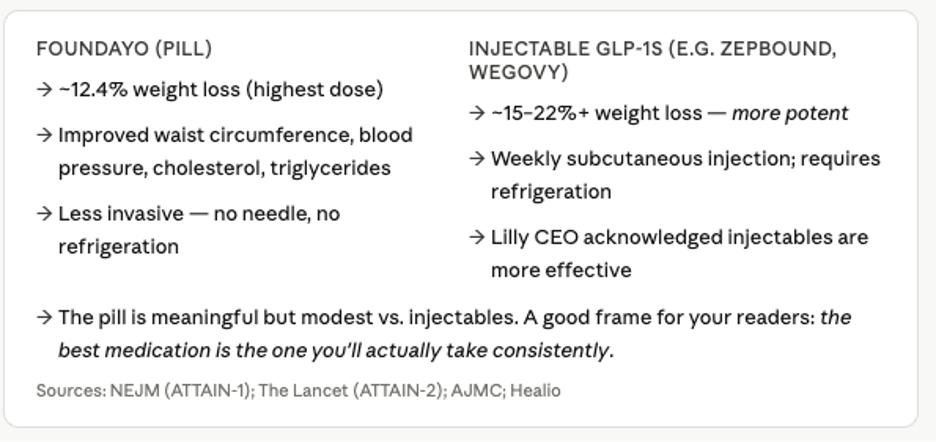
In the phase 3 clinical trial (3,127 adults, 72 weeks), participants taking the highest dose of Foundayo lost an average of 12.4% of their body weight, about 27.3 pounds for those who stayed on treatment. More than half of participants at that dose lost at least 10% of their body weight.
Compared to injectable GLP-1s and dual agonists like Wegovy or Zepbound that can produce weight loss in the 15–22%+ range, this pill is not as effective, but pills have a real place for patients who don’t want or can’t manage a weekly injection.
The best medication is the one you’ll actually take consistently. A 12% weight loss you sustain beats a 20% loss you abandon six months in.
Foundayo also showed improvements in waist circumference, blood pressure, cholesterol, and triglycerides - all heart health benefits that go beyond the number on the scale.
Who Qualifies for Foundayo?
The FDA approved Foundayo for adults who meet one of these criteria:
- BMI of 30 or higher (classified as obesity)
- BMI of 27 or higher (overweight) with at least one weight-related health condition, such as:
- High blood pressure (hypertension)
- High cholesterol or dyslipidemia
- Obstructive sleep apnea
- Cardiovascular disease
It’s meant to be used alongside a reduced-calorie diet and increased physical activity. That instruction is included into the FDA approval itself, not just a blanket suggestion.
Who should not take Foundayo:
- Anyone with a personal or family history of medullary thyroid cancer
- Anyone with Multiple Endocrine Neoplasia syndrome type 2 (MEN2)
- Anyone currently taking another GLP-1 receptor agonist
- Children: safety and effectiveness haven’t been established under age 18
Your doctor will determine whether you meet criteria and whether this medication is appropriate given your full health picture.
How Do You Actually Access It?
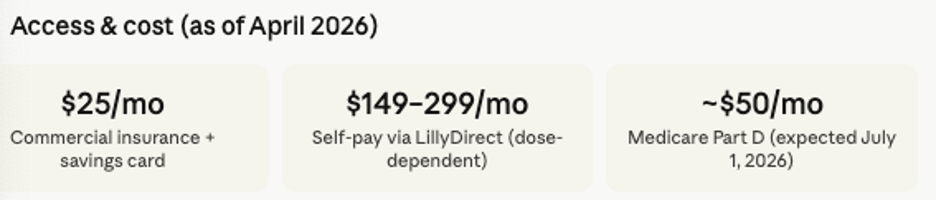
Foundayo is available right now. Here’s what the pricing landscape looks like as of April 2026:
You can get it through LillyDirect (home delivery), retail pharmacies, or telehealth providers with no special membership needed.
A few important access realities to know:
Most commercial insurance plans require prior authorization. That means your doctor will need to submit documentation of your BMI, any relevant health conditions, and evidence of prior lifestyle interventions before insurance will approve coverage. It’s not always a quick process.
Medicaid coverage varies significantly by state. Some cover anti-obesity medications, others don’t or have strict limits. If you’re on Medicaid, check directly with your plan.
The Lilly savings card expires December 31, 2026, and Lilly can change or end it at any time. Pricing is likely to shift as the market evolves.
Access is still a real barrier for many people. The science has moved faster than insurance coverage has, and even at $149/month, that’s a significant ongoing expense. More on why that matters in the next section.
The Part Nobody Wants to Talk About: This Medication Is Meant to Be Used Forever
Here’s something that gets buried in the launch excitement, and I think it deserves a lot more attention.
GLP-1 medications, including Foundayo, are designed for chronic, long-term use. That's not a caveat buried in the fine print. It's the entire clinical premise. Obesity is now recognized as a chronic disease with a biological basis, not a willpower problem. And like any other chronic disease, the medications that treat it are meant to be taken ongoing, not as a temporary fix.
Think about how we treat type 2 diabetes. When someone is prescribed metformin or insulin, there's no expectation that they'll eventually "graduate" off the medication. The disease is chronic, the treatment is ongoing, and insurance, for all its flaws, generally reflects that reality. You don't start a diabetes medication worrying that coverage will disappear in two years.
Right now, Foundayo may be affordable for you. The savings card brings it to $25 a month for commercially insured patients. Medicare coverage is coming. Telehealth access is wide open. It feels accessible and, in many cases, right now, it is.
But here’s the honest concern: that access may not last.
Insurance companies are already pulling back on GLP-1 coverage, not expanding it, because the cost burden at scale is enormous. Employer plans are dropping GLP-1 coverage. State Medicaid programs are limiting it. The $25 savings card expires at the end of 2026. What happens to someone who starts Foundayo today, builds their health around it, and then loses coverage in year two?
This isn’t hypothetical. It’s already happening to people on injectable GLP-1s. And it’s one of the most important conversations to have before starting, not after.
There is a real upside here, though. Because Foundayo is a small-molecule, synthetically manufactured pill and not a complex biologic, it is fundamentally cheaper to produce than injectable semaglutide (Wegovy). Over time, as more oral options enter the market and manufacturing scales, the cost of these medications could come down meaningfully. This is genuinely one of the more promising long-term arguments for the pill form.
And then there’s the other side of “new.”
Injectable GLP-1s like semaglutide have been studied for years in large, long-term cardiovascular outcome trials, in diverse populations, across multiple indications. We have real-world data. We know a lot about what happens to people on these medications over time.
Foundayo is different in its molecular structure. Injectable GLP-1s have years of real-world data behind them. Foundayo doesn't yet. That's not a dealbreaker, but it's worth knowing. The clinical trials were 72 weeks long, which is meaningful but not a decade.
We don’t have the same depth of long-term safety data that we have with the injectables. That doesn’t mean it’s unsafe. It means we’re still learning. And that’s worth naming, especially if you’re considering this as a long-term treatment.
None of this is a reason to avoid Foundayo if it’s right for you. It’s a reason to go in with eyes open, have a real conversation with your doctor about long-term planning, and work with a dietitian to build the habits that will support you regardless of what your medication access looks like a few years from now.
What About Side Effects?
The most common side effects of Foundayo are almost identical to injectable GLP-1s:
- Nausea
- Constipation
- Diarrhea
- Vomiting
- Abdominal pain and bloating
- Indigestion / heartburn / gas
- Fatigue
- Headache
- Hair loss
For most people, GI symptoms are most pronounced early in treatment and ease as the body adjusts. But they’re real, and they’re one of the top reasons people stop taking GLP-1 medications within the first year.
There are also more serious warnings listed in Foundayo’s prescribing information, including a boxed warning for thyroid C-cell tumors (based on animal studies; human relevance is uncertain but taken seriously), as well as risk of pancreatitis, acute kidney injury (usually related to dehydration from GI side effects), gallbladder disease, and hypoglycemia.
This is why working with your healthcare team, not just getting a prescription from a telehealth app, matters. These aren’t risks to ignore.
This Is Where a Dietitian Comes In
"I have the medication now. I’m good, right?"
I get it. After years of trying different approaches to weight management, having a medication that actually works can feel like the magic pill you’ve been wishing for. But here’s the truth: GLP-1 medications are a powerful tool, not a standalone solution. The FDA approval literally requires diet and lifestyle changes alongside the medication, not as an afterthought.
Here’s specifically where working with a registered dietitian makes a real difference when you’re on Foundayo (or any GLP-1):
Managing side effects through food. Nausea, constipation, and GI discomfort can often be significantly reduced with strategic food choices and are often times the #1 reason people stop taking the medication. This is usually preventable and working with a dietitian can increase your chances of staying with the medication.
Protecting your muscle mass. GLP-1 medications reduce overall food intake by 16–39%. That’s a big drop, and without guidance, protein tends to fall with it. Losing muscle alongside fat is common during rapid weight loss, and it slows metabolism and affects long-term weight maintenance. Most people on GLP-1s benefit from targeting around 80–100 grams of protein per day.
Preventing nutrient deficiencies. Eating significantly less means you’re getting significantly fewer vitamins and minerals. Eating smaller amounts only highlights the importance of every bite. A dietitian can identify where the gaps are and help you fill them, whether through food choices, supplements, or both.
Hydration. GLP-1s can reduce your thirst signals, making it easy to under-drink without realizing it. Dehydration worsens GI side effects and, in more serious cases, can contribute to kidney injury. Staying intentional about fluid intake is essential.
Your relationship with food. The medication quiets your appetite. It doesn’t rewrite the habits, patterns, emotional connections to food, or history with dieting that got you here. A dietitian helps you build a sustainable way of eating while the medication is helping, so that you’re not starting from scratch if you ever stop or transition to a different treatment.
Planning for the long game. Research shows that up to 75% of people discontinue GLP-1 medications within a year. When that happens, weight regain is a real risk unless healthy habits are already in place. Building those habits now is the most protective thing you can do.
A Weight Loss Dietitian’s Take
Foundayo is genuinely exciting and I don’t say that lightly. A pill that removes the injection barrier, requires no timing or food restrictions, and still delivers clinically meaningful weight loss? That’s a real advancement for people who’ve wanted a GLP-1 but couldn’t do weekly injections.
But I’d be doing you a disservice if I let the launch hype overshadow some honest truths: it’s not as powerful as the injectables, the side effects are still very much there, it’s a chronic medication (not a jumpstart), insurance access is unpredictable long-term, and we simply don’t yet have the years of safety data behind it that we have for the injectables.
None of that means it’s the wrong choice. For the right person, with the right support, it could be a genuinely life-changing tool. But “the right support” is the key phrase. The medication opens the door. What you build while you’re walking through it determines what happens next.
The pill is a tool. What you do with it matters.
If you’re curious about whether Foundayo might be right for you, start with your doctor or prescriber. And if you want support navigating the nutrition side: the side effects, the food relationship piece, the muscle and metabolism stuff, and the long-term planning, that's exactly where a registered dietitian comes in. Nutrition counseling is covered by insurance more often than people realize, and if you're in New York, I'm in network with most major insurance plans.
Have questions about Foundayo or GLP-1 medications? Drop them in the comments or reach out directly. And if you’re ready to work together, you can book a session with me.
Fuel Bettr. Feel Bettr. 💙
Sources
FDA approves Foundayo (orforglipron) for weight management, April 2026
Orforglipron for obesity treatment, ATTAIN-1 Trial — New England Journal of Medicine, 2025
Orforglipron in adults with obesity and type 2 diabetes, ATTAIN-2 Trial — The Lancet, 2025
Foundayo prescribing information — Eli Lilly, April 2026
Foundayo coverage and savings — Eli Lilly
Nutritional priorities to support GLP-1 therapy — American Journal of Clinical Nutrition, 2025
Foundayo cost and insurance guide — Drugs.com