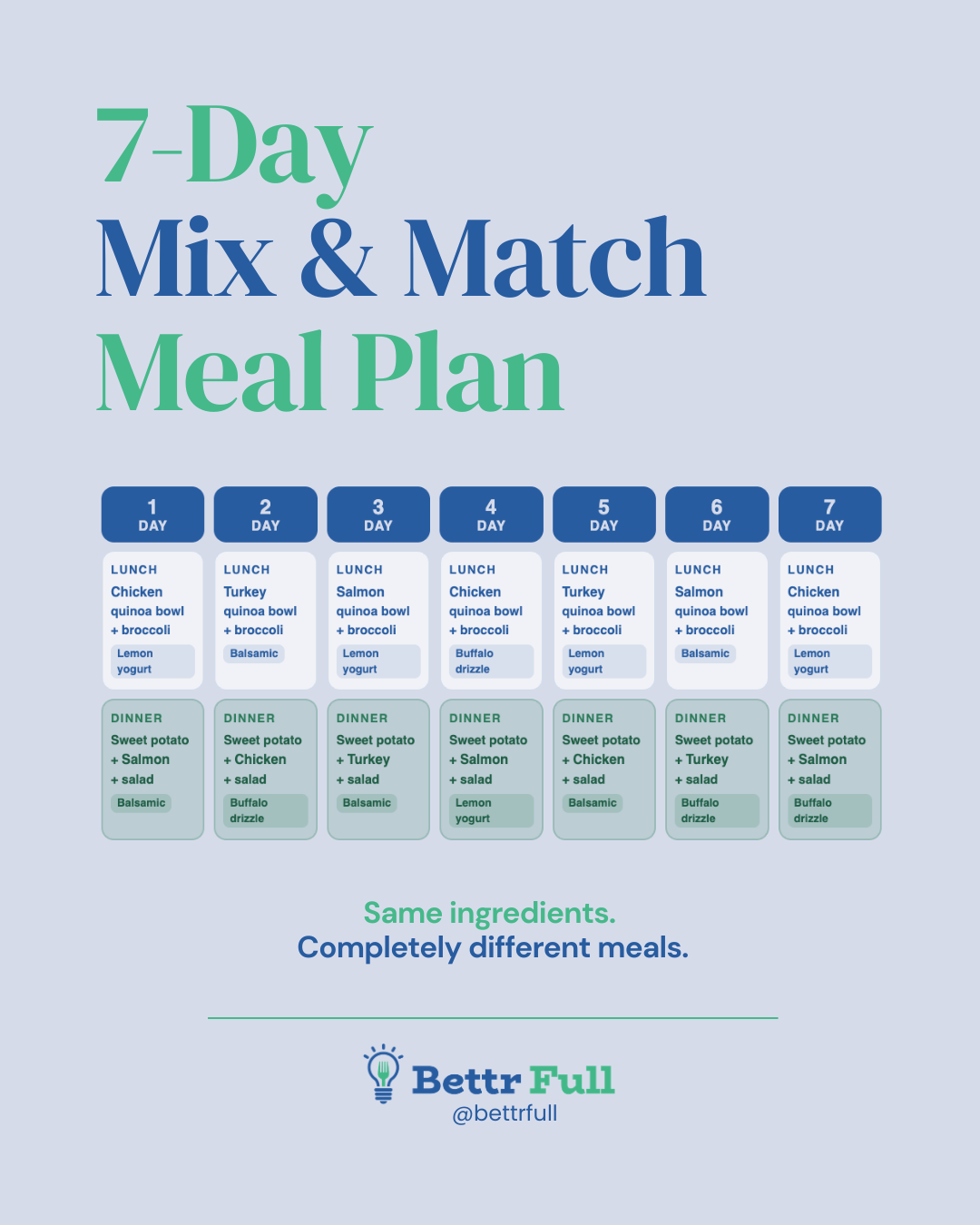
If you hate meal prepping, it’s probably because you think you have to eat the same exact thing for the next 7 days.
Chicken, rice, broccoli… repeat. No wonder you’re over it by day 3. But that’s not actually what meal prepping has to look like.
The problem isn’t you. It’s the way you’ve been taught to do it.
Below, I’m breaking down two different approaches to meal prep—so you can find what actually works for your lifestyle (and doesn’t leave you bored halfway through the week).
Because you don’t need more discipline.
You need a strategy that gives you both structure and flexibility.
A Smarter Meal Prep: Prepping Ingredients
Instead of prepping 5 identical containers, focus on building blocks:
It’s: more stable energy, better digestion, and feeling good in your body while you’re away.
1. Pick 2 Starches
Choose options that reheat well and work in multiple meals:
- Roasted potatoes
- Baked sweet potatoes
- Quinoa
- Rice (white or brown)
- Whole grain pasta
2. Prep 2–3 Proteins (Including 1 Fish)
Protein is where most people fall short. This keeps it easy and accessible.
- Rotisserie or grilled chicken
- Ground turkey, chicken or beef
- Hard boiled eggs or egg muffins
- Salmon or another fish
💡 Aim for variety in texture and flavor so meals don’t feel repetitive.
3. Add 2–3 Vegetables
Think a mix of fresh and cooked:
- One raw option (salad kit, chopped veggies)
- One or two cooked options (broccoli, zucchini, peppers, green beans, etc.)
4. Don’t Skip the Flavor (This Is Why Most Plans Fail)
This is the difference between a meal you have to eat vs one you actually want to eat.
Same base ingredients… completely different meals with sauces:
- Lemon + olive oil
- Balsamic glaze
- Tzatziki
- Salsa or pico
- Teriyaki
- Buffalo sauce
- Yogurt-based dressings
💡 You’re not changing the work—you’re changing the experience
Another Simple Strategy: Cook Once, Eat Twice
If traditional meal prep isn’t your thing, try this instead:
👉 Cook once, eat twice.
Make double portions at dinner and use leftovers for lunch or the next day.
Examples:
- Extra grilled chicken → use in a bowl or wrap
- Double quinoa or rice → remix into another meal
- Full tray of roasted veggies → use across multiple meals
💡 It’s still meal prep - just more realistic and lower effort.
What This Looks Like in Real Life
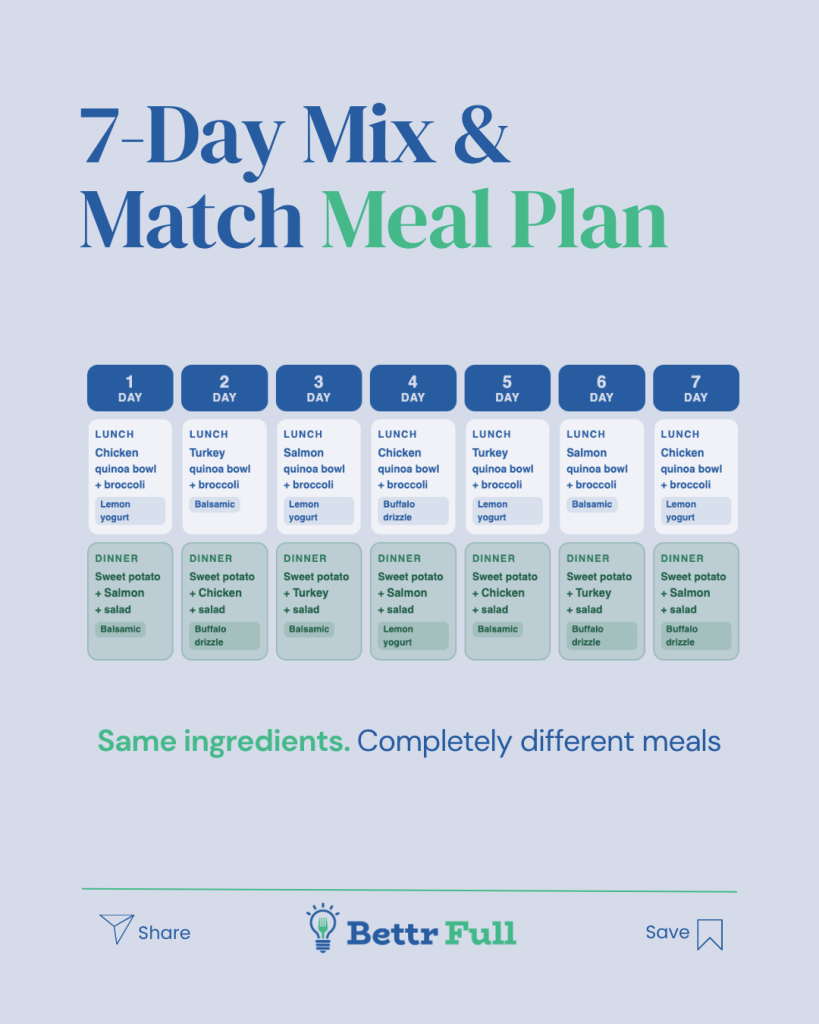
Let’s say you prep:
Starches:
- Baked sweet potatoes
- Quinoa
Proteins:
- Grilled Chicken
- Ground turkey
- Salmon
Veggies:
- Roasted broccoli
- Side salad
Now your meals can look like:
Why This Works
- Reduces decision fatigue without removing flexibility
- Helps you stay consistent even on busy days
- Prevents boredom (less takeout, more home meals)
- Supports protein + fiber intake more easily
- Works with your life, not against it
3 Practical Tips to Make This Even Easier
1. Know how long your food lasts 🧊
- Roasted broccoli
- Reduces decision fatigue without removing flexibility
- Helps you stay consistent—even on busy days
- Prevents boredom (less takeout, more home meals)Supports protein + fiber intake more easily
- Works with your life—not against it
2. Store smart for freshness
- Use airtight glass containers
- Keep sauces separate until ready to eat
- Let food cool before refrigerating to prevent sogginess
3. Freeze what you won’t use
Not going to eat it in time? Freeze it.
Cooked proteins, grains, and even roasted veggies freeze well and save you from waste.
Key Takeaway
Meal prep doesn’t need to be all-or-nothing.
It’s not about being perfect.
It’s about making your next meal easier.
Start with a few staple ingredients, keep it flexible, and build meals that actually sound good to you that day.
Consistency > perfection. Always.
If you want more realistic, sustainable ways to build balanced meals without overthinking it:
👉 Follow @BettrFull on Instagram