
Eating Well on a Budget: Stretch Your Grocery Dollar Without Sacrificing Nutrition
By Nicole Randazzo, MA, RDN, CDCES
The Reality: Rising Costs & Shrinking Budgets
With the recent government shutdown, many of my conversations with clients have shifted toward one common theme — how to stretch a grocery budget without sacrificing nutrition or blood sugar balance.
Right now, more than 41 million Americans rely on SNAP benefits to help put food on the table — and with recent benefit cuts and rising grocery prices, many households are feeling the strain even more (USDA, 2024).
Even if you’re not directly affected by the shutdown, inflation and economic uncertainty can make it feel harder to prioritize eating well. The good news? You don’t need expensive “superfoods” or specialty products to stay nourished and support steady energy. In fact, many of the most blood-sugar-friendly foods are also some of the most budget-friendly.
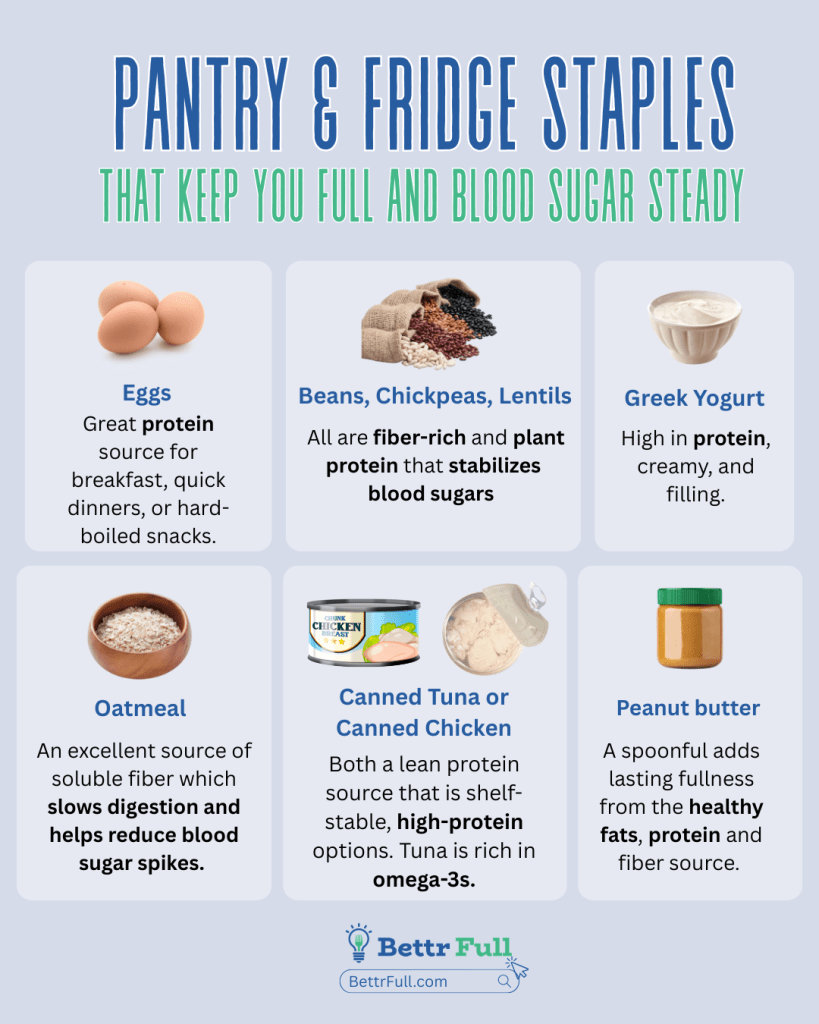
🥫 Pantry & Fridge Staples That Keep You Full and Blood Sugar Steady
Eggs – One of the most affordable sources of high-quality protein and nutrients like choline. Great for breakfast, quick dinners, or hard-boiled snacks.
Beans and chickpeas – A powerhouse combo of fiber and plant protein that stabilizes blood sugars and supports gut health. Canned or dried, they’re incredibly versatile and inexpensive.
Greek yogurt – High in protein, creamy, and filling. Choose plain, unsweetened versions and add your own fruit or a drizzle of honey.
Oatmeal – An excellent source of soluble fiber (especially beta-glucan), which slows digestion and helps blunt blood sugar spikes. Opt for old-fashioned or steel-cut oats for sustained energy.
Canned tuna or salmon – Packed with lean protein and omega-3s for heart and blood sugar health. Mix with Greek yogurt or olive oil for quick, satisfying meals.
canned chicken – A shelf-stable, high-protein option that can be added to wraps, soups, or stir-fries.
Peanut butter or other nut butters – A spoonful adds lasting fullness from the healthy fats to toast, oatmeal, or fruit. Look for options with minimal added sugar.
Frozen vegetables and fruit – Just as nutritious as fresh, and they reduce waste while saving money.
❄️ Freezer Finds That Simplify Meals
Frozen chicken, turkey, or ground beef – Buying in bulk and freezing portions helps stretch your budget and meal options.
Frozen fish fillets – Salmon, tilapia, or pollock cook quickly and are great sources of protein.
Frozen mixed veggies – Perfect for soups, grain bowls, and stir-fries — no chopping required.
Frozen fruit – Ideal for smoothies, oatmeal, or Greek yogurt parfaits.
🧠 Mindset Matters: Stress, Food, and Blood Sugar
When life feels unpredictable — whether because of finances, food access, or just daily stress — it can easily spill into how you eat and feel. You might find yourself skipping meals because groceries need to stretch, or leaning on quick, familiar foods when stress runs high. None of this means you’ve done anything wrong. It’s a reflection of your body — and your circumstances — doing their best to adapt.
That said, going too long without eating can actually make things harder on your blood sugars. Prolonged fasting can lead to crashes or big spikes later, which often drives those “I need something quick” carb cravings. Even a small, balanced snack with protein and fiber can help keep your energy more stable.
Here’s how to stay grounded and manage the emotional eating:
- Check in with your hunger: Ask yourself, “When did I last eat something with protein?” If it’s been a while, grab what’s available — even simple options like a hard-boiled egg, canned beans, or a spoonful of peanut butter.
- Keep some rhythm where you can: Having a few reliable meal or snack times can help you feel more grounded when life feels out of sync.
- Move your body: A short walk, stretching, or even tidying up can help lower stress hormones and support blood sugar balance — no gym required.
- Use what’s accessible: Frozen veggies, canned proteins, and pantry staples count as nourishing, real food.
- Give yourself grace: Access and stress ebb and flow. What matters most is doing the best you can with what you have — and trusting that it’s enough.
💰 Meal Planning on a Budget: Practical Strategies
You don’t need an elaborate prep system to eat well affordably. Try these strategies:
- Plan around core proteins: Pick 2–3 base proteins (like eggs, beans, or chicken) and use them in multiple meals.
- Batch and remix: Cook a big pot of chili, bean stew, or oats — then repurpose throughout the week.
- Shop the sales: Check store flyers or apps before heading out, and plan your meals around what’s discounted. Pair sale items with pantry staples or freezer ingredients to stretch your budget further.
- Make a list and stick to it: Planning meals for the week ahead helps you build a focused grocery list and avoid impulse buys. It also helps you double dip on ingredients — like using a bag of frozen veggies in both stir-fries and soups — to maximize your dollar.
- Visit more than one store if possible: Sometimes splitting your shopping between stores (like Aldi for staples and a local market for produce) can significantly cut costs.
- Shop seasonally and store-brand: Store brands often have the same nutrition quality at a fraction of the cost.
- Freeze strategically: Freeze cooked grains, soups, and proteins in single portions to reduce waste.
- Think balanced, not fancy: A $2 meal of beans, rice, and veggies can be as blood-sugar-friendly as a $20 salad bowl.

⚖️ Macro Education for Budget Eating
You can support your blood sugars without tracking every gram — just understand the basic building blocks:
- Protein helps stabilize blood sugar and promotes fullness.
Affordable picks: eggs, canned tuna, Greek yogurt, beans, and frozen chicken. - Fiber slows digestion and supports gut health.
Affordable picks: oats, beans, chickpeas, lentils, frozen veggies, and fruit. - Healthy fats support satiety and hormone balance.
Affordable picks: olive oil, peanut butter, nuts, and seeds. - Smart carbs (whole grains, starchy veggies, fruit) provide energy — especially when paired with protein and fat for balance
💡 Example: overnight Oats (carb) with Greek yogurt (protein) + frozen berries (fiber) + drizzle of peanut butter (healthy fat) = balanced, budget-friendly blood sugar support.
🌎 Local Food Resources and Discount Apps
Even if you don’t personally rely on food assistance, sharing these resources can help you or someone you know stretch grocery dollars:
- Food Resources & Support: Find local food resources on FoodHelpLine.org or FeedingAmerica.org.
- Discount & Cash-Back Apps:
- Flashfood: Save on groceries nearing expiration.
- Too Good To Go: Buy discounted meals and bakery items from local stores.
- Ibotta and Fetch Rewards: Earn cash back or points on grocery purchases.
Food access looks different for everyone — and knowing what’s available helps you support yourself and your community.
💛 Final Thoughts
Eating for blood sugar balance doesn’t have to be complicated or expensive.
Simple, affordable staples — like eggs, beans, Greek yogurt, oatmeal, peanut butter, and frozen veggies — can help you stay full, nourished, and steady even when life feels uncertain.
Remember: nutrition is not about perfection. It’s about small, realistic choices that support your energy, your mood, and your long-term health.
References
United States Department of Agriculture, Food and Nutrition Service. Supplemental Nutrition Assistance Program (SNAP) Data. U.S. Department of Agriculture, 2024, https://www.fns.usda.gov/pd/supplemental-nutrition-assistance-program-snap.
Leave a Reply