
Breakfast Matters: The Hidden Link Between Hormones and Weight
By Nicole Randazzo, MA, RDN, CDCES
We’ve all heard the phrase “breakfast is the most important meal of the day.” While that may sound cliché, there’s real science behind why skipping breakfast can backfire when it comes to weight loss and hormone balance. Let’s break it down.
1. Skipping Meals Leads to Night Time Cravings
When you go too long without eating, especially after an overnight fast, your body ramps up hunger hormones and lowers satiety (fullness) cues. This is seen with late-night cravings or overeating later in the day.
Think of it this way: skipping breakfast is like ignoring your gas light and expecting your car to keep running smoothly. Eventually, your body demands fuel, and often in the form of quick, less-nutritious options like sweets or junk foods that consist of simple carbohydrates.
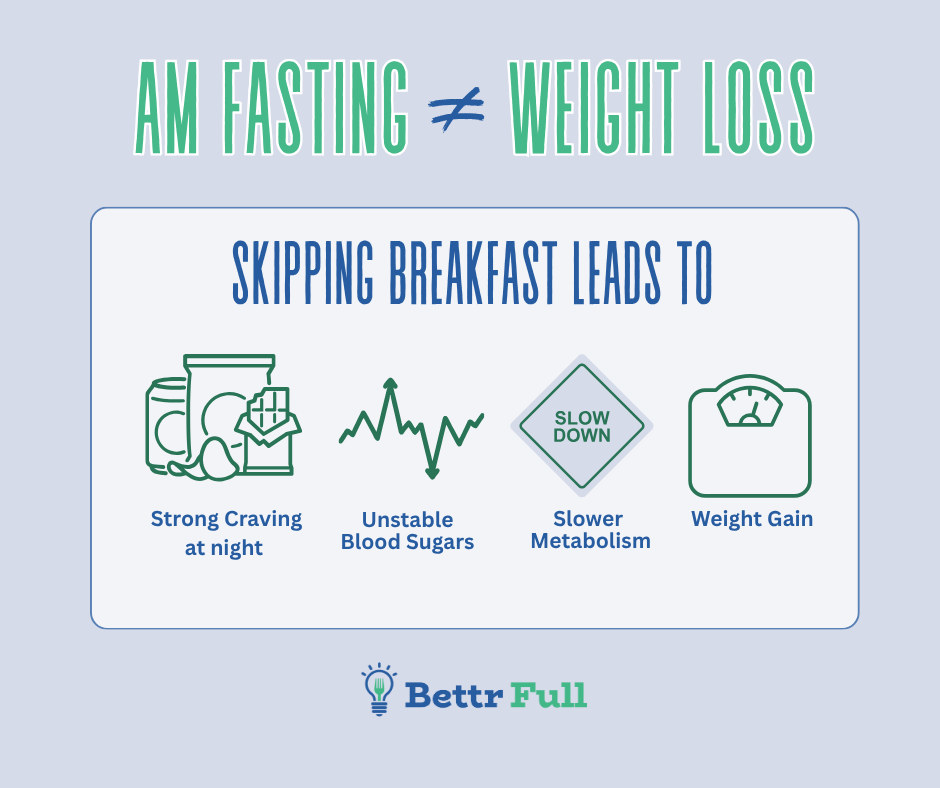
2. Hunger Hormones and Insulin Sensitivity
Your body has hormones that regulate appetite and blood sugar. When you skip breakfast, these get thrown out of balance.
Research shows that skipping breakfast can disrupt both metabolism and hormones. In one study, eating breakfast helped boost satiety hormones like peptide YY and leptin, while also keeping ghrelin—the hunger hormone—better regulated. When breakfast was skipped, these hunger-suppressing effects were blunted later in the day (Levitsky & Pacanowski).
Skipping breakfast has also been shown to impair insulin sensitivity, meaning your body doesn’t handle blood sugar as efficiently. Women in one study had higher insulin levels after meals when they skipped breakfast compared with when they ate it (Nas et al.).
Another trial found overweight women experienced acute insulin resistance after lunch when they skipped breakfast—higher glucose and insulin spikes—compared with breakfast-eating days (Jakubowicz et al.).
Bottom line: Skipping breakfast makes it harder for your body to regulate both hunger and blood sugar.
3. Rebound Hunger
Skipping breakfast may seem like a way to “save calories,” but the evidence suggests otherwise. A systematic review showed that breakfast skippers often eat more later in the day to make up for it (Betts et al.).
Ever notice that when you skip breakfast, you’re hungrier and less in control of food choices later on? That’s not just willpower—it’s physiology.
4. Weight Management and Obesity Risk
Large population studies have found a strong link between skipping breakfast and higher rates of weight gain, obesity, and type 2 diabetes (Ma et al.; Cahill et al.).
For children and teens, the data is striking. A review of 40 studies found that breakfast skipping significantly increased the odds of overweight and obesity:
- Overweight: 37% higher odds
- Obesity: 51% higher odds
- Combined: 59% higher odds (Katsoulis et al.).
5. Metabolic Rhythm & “Chrononutrition”
- Our bodies run on circadian rhythms. Think of it as internal clocks that influence how well we metabolize food. Breakfast acts like a “reset button,” syncing your metabolism with your day.
- Skipping breakfast disrupts this rhythm, which has been linked with higher obesity and diabetes risk (Oike et al.). Research shows that eating earlier in the day improves weight control and blood sugar regulation (Sutton et al.).
6. Blood Sugar Spikes After Skipping
Even if you eat the same amount of calories later in the day, skipping breakfast can make your blood sugar harder to control. Healthy men who skipped breakfast had significantly higher blood sugar after lunch compared to when they ate breakfast (Maki et al.).
Health experts caution that regularly skipping meals may raise the risk for prediabetes and type 2 diabetes by destabilizing blood sugar (Moyer).
Over time, this pattern of big swings in blood sugar make it more difficult for your body to maintain balance. These fluctuations don’t just impact energy levels—they can also strain important organs like your heart, blood vessels, and kidneys.
7. A Dietitian’s Perspective
As a dietitian, I see this all the time: when clients skip breakfast, they often experience stronger cravings, heightened evening hunger, and greater challenges with blood sugar stability.
But it’s not just about hunger. Breakfast is also a prime opportunity to take in important nutrients. Skipping it can make it much harder to meet your daily needs for both macronutrients and micronutrients.
The Takeaway
Skipping breakfast won’t magically help you lose weight. In fact, it may do the opposite by throwing off your hormones, driving cravings, impairing blood sugar control, and increasing the risk of overeating later.
The smarter move? Start your day with a balanced breakfast rich in protein, fiber and healthy fats —think eggs with avocado and veggies, overnight oats with chia seeds, or Greek yogurt with fruit. You’ll set yourself up for steadier energy, better appetite control, and more intentional eating all day long.
Balanced Breakfast Ideas
💡 Dietitian Tip: Aim to build your plate with each component — protein, fiber, and healthy fat. This combo keeps you satisfied, helps manage cravings, and supports stable hormones throughout the day.
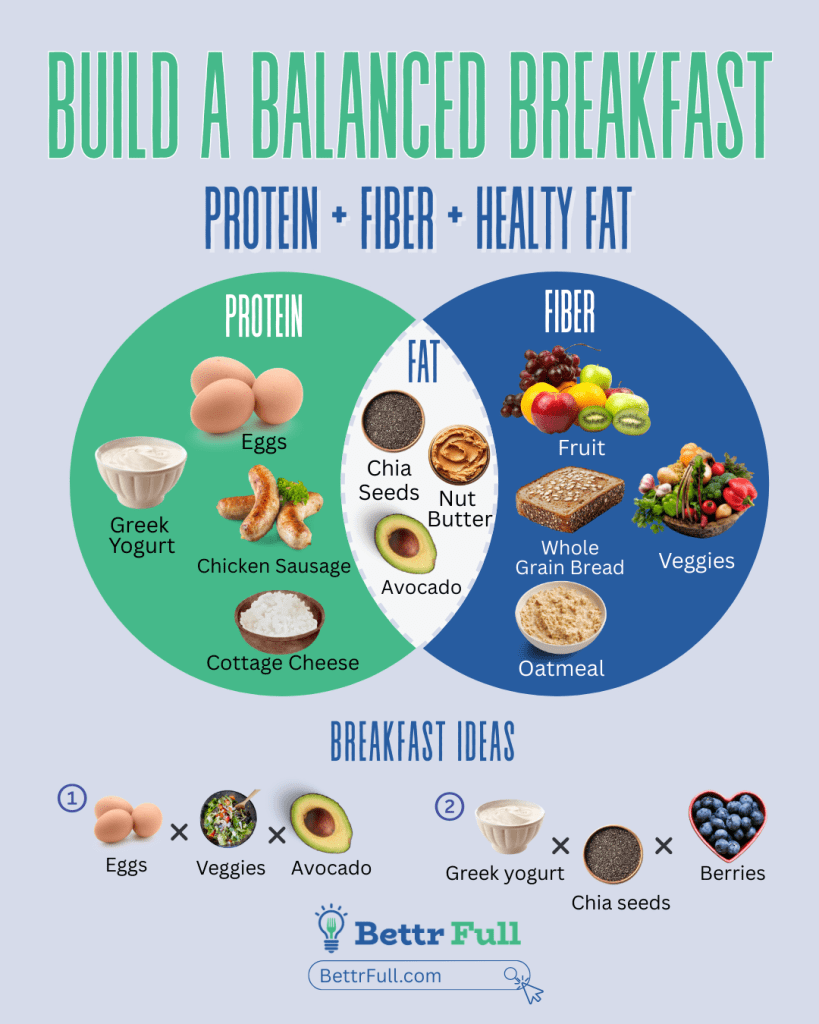
Easy, Balanced Ideas:
1. Scrambled eggs with veggies + ½ avocado + 1 slice whole wheat toast
Eggs provide protein, while sautéed veggies and whole wheat bread add fiber. The avocado contributes healthy fats to keep you satisfied.
2. Greek yogurt with chia seeds + ½ cup blueberries
A creamy, high-protein base with omega-3–rich and healthy fats from chia seeds and high fiber carbohydrates blueberries makes this a quick but powerful option.
3. Whole grain toast with almond butter + sliced banana
The toast gives slow-digesting carbs, almond butter adds protein and healthy fats, and banana offers natural sweetness plus potassium.
4. High Protein Breakfast sandwiches
Mix cottage cheese into eggs for extra protein, then layer with chicken sausage and veggies on a whole wheat English muffin. It’s a healthier, homemade swap for a McMuffin. packing in more protein while cutting back on saturated fat and extra calories.
Works Cited (MLA)
- Betts, James A., et al. “The Causal Role of Breakfast in Energy Balance and Health: A Randomized Controlled Trial in Lean Adults.” American Journal of Clinical Nutrition, vol. 100, no. 2, 2014, pp. 539–547.
- Cahill, Leah E., et al. “Prospective Study of Breakfast Eating and Incident Coronary Heart Disease in a Cohort of Male US Health Professionals.” Circulation, vol. 128, no. 4, 2013, pp. 337–343.
- Jakubowicz, Daniela, et al. “Influence of Breakfast on Clock Gene Expression and Postprandial Glycemia in Healthy Individuals.” Diabetes Care, vol. 40, no. 11, 2017, pp. 1573–1579.
- Katsoulis, Michail, et al. “Breakfast Skipping and Overweight/Obesity in Children and Adolescents: A Systematic Review and Meta-Analysis.” Frontiers in Nutrition, vol. 10, 2023, Article 1222536.
- Levitsky, David A., and Christine R. Pacanowski. “Effect of Breakfast on Appetite and Energy Intake: A Randomized Crossover Trial.” Appetite, vol. 75, 2014, pp. 9–16.
- Maki, Kevin C., et al. “Breakfast Skipping Is Associated with Postprandial Hyperglycemia after Lunch in Healthy Young Men.” British Journal of Nutrition, vol. 112, no. 4, 2014, pp. 647–656.
- Nas, Atakan, et al. “Skipping Breakfast Impairs Glycemic Control in Healthy Women.” Scientific Reports, vol. 7, 2017, Article 44136.
- Oike, Hideaki, et al. “Circadian Clock Gene Per2 Is Essential for Maintaining Normal Metabolic Function.” International Journal of Molecular Sciences, vol. 25, no. 22, 2024, Article 12355.
- Sutton, Edward F., et al. “Early Time-Restricted Feeding Improves Insulin Sensitivity, Blood Pressure, and Oxidative Stress Even without Weight Loss in Men with Prediabetes.” Cell Metabolism, vol. 27, no. 6, 2018, pp. 1212–1221.
Leave a Reply