The Science Behind Food Noise: What’s Happening in Your Brain and What to Do About It
By Nicole Randazzo, MA, RDN, CDCES
Most of us think about food dozens of times a day and that’s biological. Thinking of food is your brain doing its job. But there’s a difference between a passing thought about what’s for lunch and the kind of relentless, looping preoccupation with food that follows you from morning to night, long after you’ve already eaten. That second experience has a name: food noise. And understanding it could change the way you think about cravings, willpower, and your relationship with food entirely.
What Is Food Noise, Exactly?
The term “food noise” entered mainstream conversation alongside the rise of GLP-1 medications like semaglutide (Ozempic, Wegovy). Pharmaceutical companies and health advocates used the term to describe the constant preoccupation with food, the overthinking, the mental circling, the fixation‚ that makes it hard to stay on a healthy diet and lose weight. When patients started taking these medications, many reported something surprising: the noise stopped. For the first time, they simply weren’t thinking about food all day. The term caught on quickly, giving language to experience millions recognized but had never been able to name.
Today, food noise has a formal clinical definition: persistent, unwanted thoughts about food that are distressing and may cause social, mental, or physical harm. A validated measurement tool, the Food Noise Questionnaire, was developed in 2025 ‚ confirming food noise is a real, measurable phenomenon that directly correlates with overeating behavior.
But the term isn’t entirely clear-cut, and the way diet culture and wellness culture have framed it deserves some scrutiny.
Not all food thoughts are a problem. Our brains evolved to keep us alive, and seeking nourishment is one of our most fundamental survival drives. When your energy dips, your brain naturally starts directing your attention toward food ‚ what to eat, when, where to find it. That is not a malfunction. That is your brain doing exactly what it is supposed to do.
food noise is when food thoughts become relentless, intrusive, and disconnected from actual physical hunger. It’s the mental chatter that hijacks your attention whether you need to eat or not. Normal hunger cues are your body communicating. Food noise is the signal stuck on repeat.
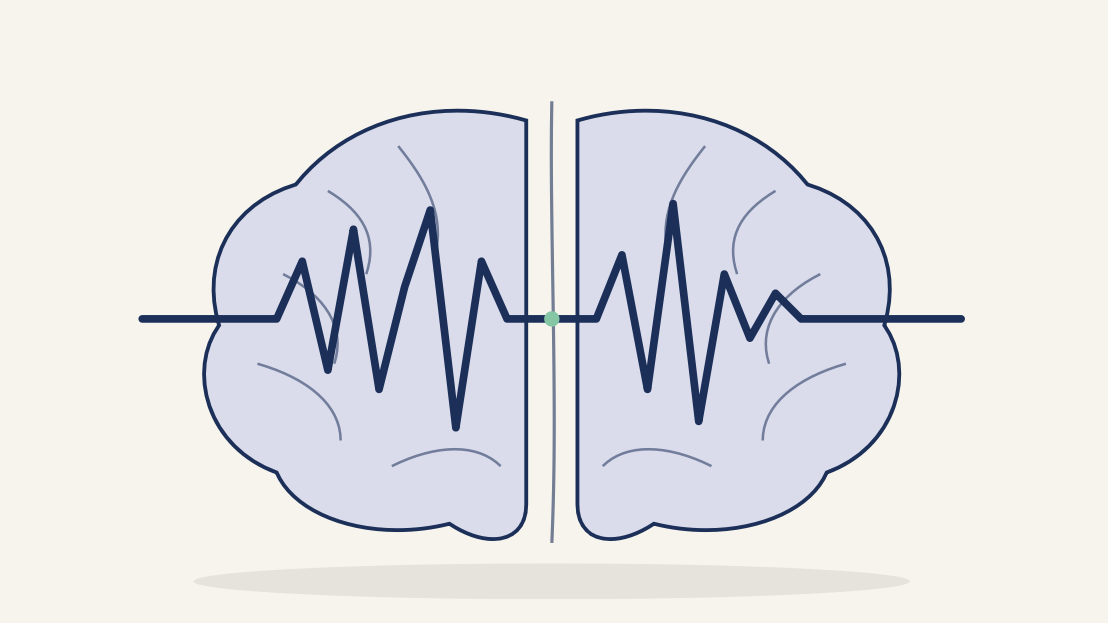
Why Food Noise Has Nothing to Do with Willpower
This is the most important thing to understand: If you’ve spent years thinking you just lack discipline around food, you were working with incomplete information. This isn’t a willpower story. It never was.
When you’re not focused on a specific task ‚ when you’re daydreaming, scrolling, or simply sitting quietly ‚ a part of the brain called the Default Mode Network (DMN) switches on. Think of the DMN as your brain’s background operating system: it generates spontaneous thoughts, runs through future scenarios, and fills mental downtime. Research shows our minds are in this wandering state roughly 47% of the time.
For most people, the DMN wanders across all kinds of topics. For people prone to food preoccupation, it can get stuck on food as its default. A trigger ‚ the smell of something baking, a food ad, a stressful moment ‚ kicks the DMN into a craving loop: a vivid mental simulation of eating that feels urgent even when there’s no physical hunger behind it.
Researchers call this maladaptive prospection‚ the brain simulating short-term reward (eating something pleasurable) at the expense of longer-term goals. It’s the same mechanism behind the rumination loops seen in depression and anxiety. In fact, obesity and depression frequently co-occur, and brain imaging studies show overlapping DMN irregularities in both ‚ suggesting they share deeper roots than we once realized.
The takeaway: food noise isn’t something you can simply think your way out of. The thoughts are being generated by a brain network that operates largely below conscious awareness. Managing it effectively means working at the level of the brain ‚ not just the behavior.
How GLP-1 Medications Quiet the Signal
GLP-1 receptor agonists ‚ including semaglutide (Wegovy, Ozempic) and tirzepatide (Mounjaro, Zepbound) work by mimicking a gut hormone that’s naturally released after eating, slowing digestion and sending satiety signals to the brain. But what patients and researchers began noticing goes well beyond feeling full faster.
GLP-1s act directly on the brain’s reward circuitry. In neuroimaging studies, participants given GLP-1 medications showed significantly reduced brain activation in response to images of high-calorie foods ‚ particularly in regions tied to craving and reward anticipation. They also ate fewer calories afterward.
One of the most fascinating findings: GLP-1s appear to shift the balance between wanting and liking food. In many people who overeat, the brain lights up intensely in anticipation of food but delivers blunted satisfaction during the actual eating ‚ a mismatch that drives the “always chasing, never satisfied” cycle. GLP-1 medications reduce the urgency of wanting while normalizing the experience of liking, so a smaller amount genuinely feels like enough.
Emerging evidence also suggests GLP-1s may quiet DMN activity connected to food rumination ‚ which aligns with what patients describe: not just less hunger, but a new mental quietness around food.
These effects extend beyond food, too. Studies have linked semaglutide to reduced alcohol cravings, and large-scale health analyses have found lower rates of substance use disorders, anxiety, and depression among GLP-1 users. The medication appears to recalibrate the reward system more broadly.
The Window: Why GLP-1s Create an Opportunity
GLP-1s quiet the noise ‚ but they don’t change the underlying relationship with food. If or when medication is reduced or stopped, the physiological appetite suppression eases. For people who haven’t used that quieter period to build real skills and habits, returning to baseline is a genuine risk.
But for those who do use the window? The outcome can be very different.
When food noise decreases, cognitive and emotional bandwidth opens up. The mental energy that was constantly occupied by food thoughts becomes available for sustainable change. Motivation tends to be unusually high during this period. Healthy choices feel less like white-knuckling and more like something that’s actually accessible.
Think of it less like a diet and more like a renovation with the loud construction noise has finally stopped. You can actually hear yourself think, which means you can actually make changes that stick.
Mindfulness: The Other Path to a Quieter Mind
So where does that leave people who aren’t on medication, or don’t want to be? Long before GLP-1s existed in the weight loss space, mindfulness practices were achieving something remarkably similar in the brain ‚ through a completely different route.
Neuroimaging studies show that regular mindfulness practice reduces activity in the core hubs of the DMN and strengthens connections between the default mode and the brain’s executive control regions.
Experienced meditators show measurably less mental chatter at rest, and a greater ability to notice and redirect thought patterns without being swept away by them.
For food noise specifically, this is significant. Mindfulness doesn’t stop cravings from arising ‚ it trains the brain to observe a craving without automatically acting on it. You notice the thought: I want that. You watch it. You breathe. The craving passes, or you make a conscious choice. Either way, you’re no longer on autopilot.
Research on Mindfulness-Based Cognitive Therapy for depression found that mindfulness training disrupted the neural patterns behind rumination ‚ reducing connectivity between the brain’s salience network and the memory regions fueling the thought loops. The same mechanism applies to food-related loops.
The two approaches work through different but complementary pathways:
GLP-1 blunts the biological signal‚ it turns down the volume on the reward circuits.
Mindfulness changes how you handle the signal when it appears ‚ it trains the executive brain to step in before a craving becomes a behavior.
One works through your physiology, the other through your attention, and together they’re hitting food noise from both directions.
How to Manage Food Noise‚ On or Off Medication
These evidence-informed strategies work regardless of whether you’re on a GLP-1:
Reduce environmental triggers. Food noise often starts with a cue. Keep highly palatable foods out of plain sight, audit your social media feeds, and be intentional about your kitchen setup. Fewer cues, fewer loops.
Practice the pause. When a food thought arises, try five slow breaths before responding to it. This activates the prefrontal cortex ‚ your brain’s executive control center ‚ and interrupts the automatic cue-response pathway. Over time, the pause becomes a reflex.
Name what you’re actually feeling. Much of food noise is emotion-driven‚ tied to stress, boredom, loneliness, or anxiety. Asking yourself “what am I actually feeling right now?” before reaching for food builds the emotional literacy that gradually reduces mindless eating patterns.
Eat with intention. Mindful eating ‚ sitting down, removing screens, slowing down, noticing flavors ‚ gives your brain enough time to register early fullness. This matters especially on GLP-1s, where smaller portions are the norm and satisfaction should be savored.
Create structured eating patterns. Irregular eating amplifies food-preoccupied thinking. Regular, balanced meals with adequate protein, fiber, carbohydrates, and healthy fats reduce the physiological hunger signals that trigger the DMN’s craving loops.
Build a daily mindfulness practice. Even 10 minutes of breath-focused attention has measurable effects on DMN activity over time. Apps, guided programs, and mindfulness-based eating courses are widely accessible starting points.
Know your high-risk moments. Food noise tends to peak at predictable times, late afternoon, evenings, after stressful situations, or when sitting idle. Knowing your patterns lets you prepare: have a plan, a grounding practice, or a non-food activity ready for those windows.
Why Working with a Dietitian Makes a Real Difference
Managing food noise isn’t just about techniques. It’s about understanding why food has held so much mental real estate in the first place.
For a lot of people, the root causes run deeper than habit: years of restrictive dieting that trained the brain to treat scarcity as the norm, emotional patterns where food became the go-to coping tool, or simply never having learned what actually satisfying nourishment feels like day to day.
A dietitian who works in this space helps you connect those dots. And if you’re on a GLP-1, that support becomes especially valuable during the quieter window: making sure you’re eating enough of the right things, building habits that carry forward when the medication changes, and getting at root causes rather than just symptoms.
The goal is a place where food takes up exactly the mental space it deserves. Present when it’s time to eat, quiet the rest of the time. Ask anyone who’s gotten there: food just becomes food. Not a negotiation, not a reward system, not background noise.
—–
Whether you’re navigating a GLP-1 journey, working through your relationship with food, or simply trying to quiet the noise, that’s exactly what we do at Bettr Full.
Sources
Cook G. “Quieting ‘Food Noise’: How GLP-1s and Mindfulness Rewire the Default Mode Network (DMN) and Reward Circuits.” Cureus. 2026 Jan 5;18(1):e100818. Additional references available on request.*
Fuel Bettr. Feel Bettr. 💙

Leave a Reply